
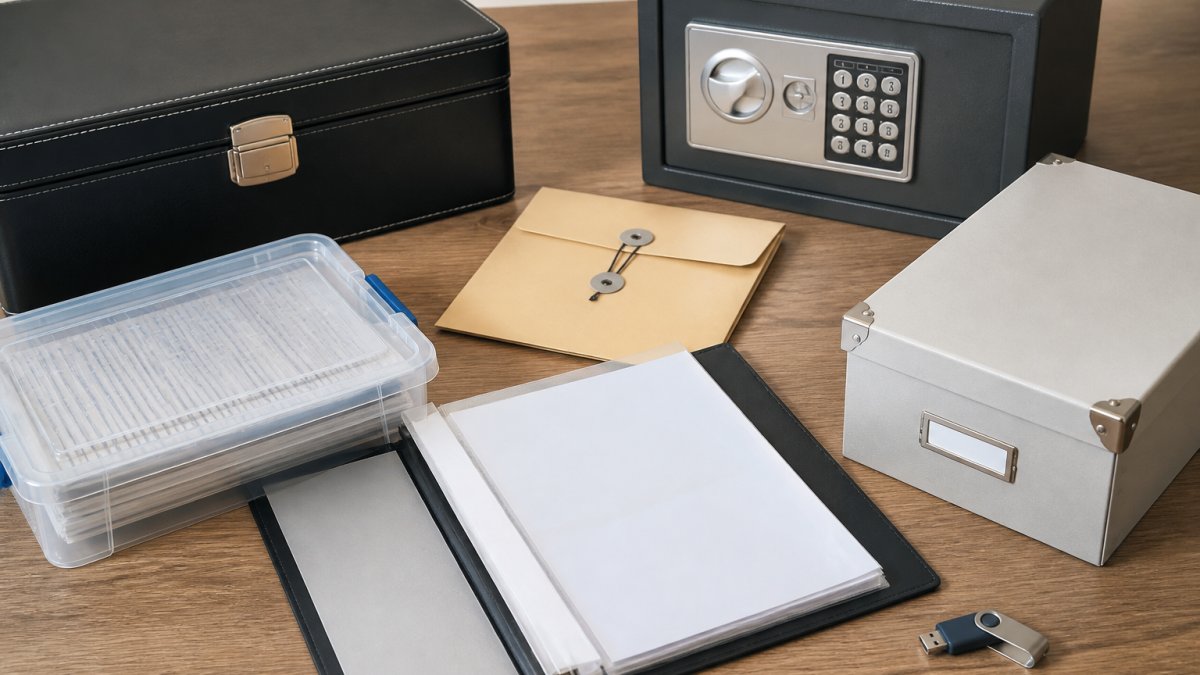
 listicle
5 Best Ways to Store a Legal Will
Table of Contents
- Why Storing Your Will Correctly Matters
- 1. HM Courts & Tribunals Service (Probate Service)
- 2. Professional Solicitor Storage
- 3. Fireproof Home Safe
- 4. National Will Register (Certainty)
- What Happens If a Will Is Lost or Destroyed
- Duties of an Executor: Why Storage Location Matters
- Choosing the Right Storage Method for Your Will
- Frequently Asked Questions
Last Updated: September 30, 2026
Why Storing Your Will Correctly Matters
Your will is one of the most important documents you'll ever create. It determines who inherits your assets, who cares for your children, and how your estate gets managed after you're gone. Yet many people create a will and then store it carelessly, tucked in a drawer, left with a partner who might misplace it, or hidden so well that no one can find it when they need it most.
The problem isn't just about losing the document itself. If your will goes missing or gets damaged, your family faces legal chaos. Executors spend months searching for it. Your wishes might never be carried out. Your estate could be divided according to intestacy rules rather than your actual preferences. Worse, a lost will can trigger costly court proceedings that drain your estate and leave your loved ones in conflict.
Proper storage prevents family disputes and protects legacies. The right storage method ensures your will survives, remains legally valid, and gets found quickly when it matters most. This guide covers five proven ways to store a legal will, each with distinct advantages and trade-offs. By the end, you'll know exactly which option suits your circumstances.
1. HM Courts & Tribunals Service (Probate Service)
The most secure and officially recognised option is depositing your will with the HM Courts & Tribunals Service. This is the government's own storage facility, designed specifically to safeguard original wills.
How it works: You submit your original will to the Probate Service along with a completed application form. They store it in a fireproof, climate-controlled vault. Only upon your death, when your executor applies for probate, can the document be retrieved through an official process. This eliminates any risk of the will being lost, damaged, or tampered with before it's needed.
Pros:
- Highest level of legal security and official recognition
- Government-backed storage means no risk of the facility closing or losing documents
- Eliminates concerns about the document being found by the wrong person
- Clear, standardised retrieval process that executors understand
Cons:
- Requires a specific application process to deposit and retrieve
- The retrieval process can take time during probate proceedings
- Not suitable if you need regular access to review or update your will
This option works best for those who want absolute peace of mind that their will is safe and legally protected. The HM Courts & Tribunals Service provides detailed guidance on the deposit process and current fees.
2. Professional Solicitor Storage
Many solicitors offer secure storage as part of their estate planning service. If you have your will drafted by a solicitor, they typically hold the original document in their fireproof safe.
This approach offers practical advantages. Your solicitor knows the will intimately, they drafted it, reviewed it for legal compliance, and understand your intentions. When your executor contacts them after your death, they already have the document and can guide the probate process. There's no searching, no guessing about where the will might be.
Pros:
- Ensures the document is easily located by the executor
- Professional oversight of legal compliance
- The solicitor can provide guidance during probate
- Storage is often included in the cost of drafting the will
Cons:
- Fees vary significantly between firms
- If your solicitor closes their practice, you'll need to retrieve the will and store it elsewhere
- Limited access for you to review the document if needed
This is the most common choice for people who've had professional help creating their will. Your solicitor becomes the custodian, which simplifies things considerably when the time comes. Staniland Estate Protection offers comprehensive estate planning services, guiding clients through the complexities of wills, lasting powers of attorney, and asset protection. They ensure clients achieve peace of mind, knowing their wishes are clearly documented and their loved ones are fully protected.
3. Fireproof Home Safe
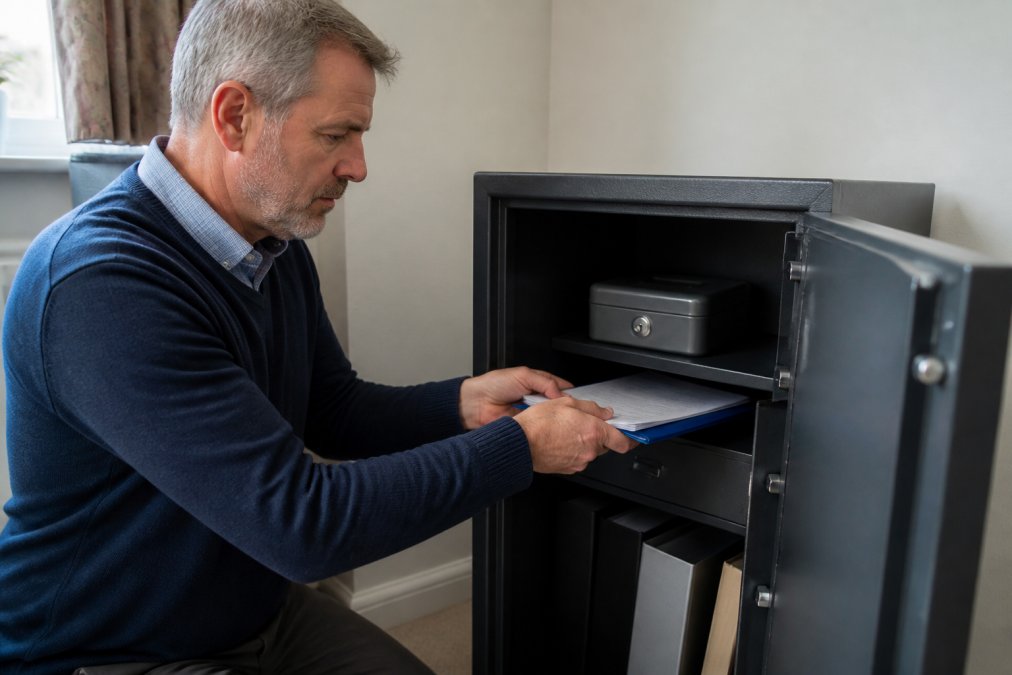
For those who prefer keeping documents at home, a fireproof safe offers practical protection against the most common threats: fire and water damage.
A quality fireproof safe, like those certified to UL or ETL standards, protects documents from temperatures that would destroy paper in an ordinary fire. Water-resistant seals guard against flood damage. You maintain immediate access to review your will whenever you need to, and you don't pay ongoing storage fees.
Pros:
- Immediate access for the owner
- Protection against environmental hazards like fire and flooding
- One-time purchase cost with no annual fees
- Keeps sensitive documents private and under your control
Cons:
- Risk of the document not being found if executors are unaware of the safe's location
- Safes can be stolen if not properly secured
- Requires you to remember to tell someone where the safe is and how to access it
The critical weakness here is communication. A safe is only valuable if your executor knows it exists and can access it. You must tell at least two trusted people, ideally your executor and a family member, exactly where the safe is and provide them with the combination or key. Without this step, your will might as well be lost.
4. National Will Register (Certainty)
The National Will Register solves the "lost will" problem through a different approach. Rather than storing your physical document, this service registers the location of your will, creating a searchable database that executors can access.
When you register with the service, you provide details about where your will is stored, whether with a solicitor, in a home safe, or elsewhere.
Pros:
- Prevents the "lost will" scenario
- Widely used by solicitors and recognised by probate professionals
- Executor can locate the will quickly regardless of where it's physically stored
- Works alongside any other storage method
Cons:
- Doesn't store the physical document itself, so you still need another storage method
- Requires you to update the register if you move your will to a different location
- Adds a small additional cost on top of your primary storage method
What Happens If a Will Is Lost or Destroyed
If your original will disappears or gets damaged, the legal consequences can be serious. An executor cannot simply act on a photocopy or memory of what the will said. They need the original document, signed and witnessed according to legal requirements.
Duties of an Executor: Why Storage Location Matters
Your executor has significant legal responsibilities. They must locate your will, prove it's valid, identify all your assets, pay any debts and taxes, and distribute what remains according to your wishes (Dealing with the estate of someone who's died: Overview). These duties are demanding, and the first step, finding the will, sets the tone for everything that follows.
Choosing the Right Storage Method for Your Will
The best storage method depends on your priorities. If security and official recognition matter most, the HM Courts & Tribunals Service offers unmatched protection. If you want simplicity and professional guidance, a solicitor's storage keeps everything in one place. If you prefer home storage with protection, a fireproof safe works well, provided you tell your executor where it is. And if you want a safety net ensuring your will gets found, the National Will Register adds valuable peace of mind.
| Storage Method | Security Level | Access Speed | Best For | Key Consideration |
|---|---|---|---|---|
| HM Courts & Tribunals Service | Highest | Slow (probate process) | Maximum legal protection | Official government storage |
| Professional Solicitor | High | Fast (executor contacts solicitor) | Professional guidance included | Fees vary by firm |
| Fireproof Home Safe | Medium | Immediate | Home storage with protection | Executor must know location |
| National Will Register | Medium | Fast (registry lookup) | Locating wills stored elsewhere | Supplement only, not primary storage |
Frequently Asked Questions
Should I keep my will in a bank safe deposit box?
Bank safe deposit boxes offer good protection from fire and theft, but they have a significant drawback: access can be restricted after your death. Banks may seal the box pending probate, which delays your executors' ability to retrieve the will when they need it most. Government-backed storage through HM Courts & Tribunals Service or a solicitor's fireproof safe typically provides faster access for executors while maintaining security.
Do I need to tell my executors where my will is stored?
Yes, absolutely. Your executors cannot carry out your wishes if they cannot find your will. Tell them the exact location, whether that's with a solicitor, in a home safe, or registered with a service like the National Will Register. Consider providing written instructions alongside your will or in a separate letter of wishes. This prevents delays and ensures your estate is settled smoothly.
What happens if my original will is lost or destroyed?
If your original will cannot be found, the courts may accept a copy if they can verify its authenticity and your intentions. However, this creates legal complications and expense. If no will can be located, your estate may be distributed according to intestacy rules, which may not reflect your wishes. Storing your original will securely with a solicitor or the government Probate Service significantly reduces this risk.
How do I register my will with a national database?
You can register your will's location with the National Will Register (Certainty) for a one-off registration fee. This service records where your will is stored, allowing executors to locate it easily after your death. Registration is particularly useful if your will is stored at home or with a professional, as it provides a central point of reference. Many solicitors register wills automatically as part of their service.
What are the main duties of an executor, and how does will storage affect them?
An executor's key duties include locating the will, applying for probate, identifying assets, paying debts and taxes, and distributing the estate to beneficiaries. If your will is stored securely with a solicitor or registered on a national database, your executor can access it quickly and begin these duties without delay. Poor storage, such as an undisclosed home location, can frustrate executors and slow the entire probate process.